By Linda Stein
Nov.21st 1984
Operation Tirtza-Jan.4th, 1984
Exhibit at The Miami Jewish Museum
April 2024
We all have Missions of The Heart.
My Mission was to visit the Ethiopian Jews
For my honeymoon.
My mom, Carolyn Kerner Stein was Chapter President of Ort in Oakland Hills Michigan, and Aventura, Florida Ort means Organization in Rehabilitation in Training.
I helped vigorously, as a grade schooler to sell those delicious crunchy Chocolate Pecan Turtles. Those turtle sales were used to build a school and a Temple in Ambobar, Ethiopia. The buildings were to be of brick with a metal roof. This would be a change from the customary mud and dung huts made with straw and a thatched roof. Theses were not stylized Tiki huts where you swim up and ask for a drink.
These buildings were to be used by the surrounding Jewish Villages. In 1983- they were called The Falashas, The People of Water,The Outcast, The People of Israel. Today, they call themselves B’nai Israel, Children of Israel. Ort had 22 schools and 300 students in Ethiopia in 1977- so that’s where I was headed.
Jan.2nd,1984 was a beautiful blue skies windy day. I had boarded a small twin engine prop plane, definitely felt like an old Easter Airlines Puddle Jumper. Next to me were others from Addis Ababa going to Gondar. The passengers looked like village farmers who must have gone to market. With them on this tiny plane for 14 were goats and chickens. And they didn’t even need to wear seatbelts. As we circle the landing. I notice little boys, with round pyramid shaped satchels(covered in a cowhide or goat skin).
Those satchels, I now understand were their lunchboxes whether they were minding cattle, shepherding goats or going to school. The satchels swished off their shoulder as they ran around shooing the cows away so we could land. Those satchels, I have now seen in museums and at fancy hotels in Uganda- they range from $340-$1600.
We arrive at Hotel Ghoa built and designed by Russians. Very stateley. Definitely out of place in the natural rugged and hilly countryside of Gondar. Everything felt functional, not comfortable.everything was angular, except for the rounded tent-like bar. After check-in (and after we rendered our passport), we realized that this 200 person capacity hotel had No Staff and No Tourist. A desolate place with No People!
We meandered to the bar and the one person who checked us in and spoke little english, gave us a lemonade. Thoughts flooded to me wondering if I left back-up addresses of where I was staying or just an itinerary of dates and cities to visit. I took note that there was no front desk phone. Who still operates with Ham Radio? Did anyone really know where I was? How did this place operate in better times?
The dry heat convinced us to look for the pool-a nice shade of slimy green. This clearly was not in the original brochure. The lounge chairs were back breaking. Some Russian manufactured a U.S. design but something went amiss. Within minutes a troop w/ big ammo marches by as if we were non-existent. Next, miles and miles away we notice small explosions- is that Trainning? Is that war in Eritrea? I checked the weather and I checked the state department months ago when I booked the trip. Maybe I should have done a double check days before I took off.
In our room, which had the feeling that it wasn’t used in quite sometime. So this was the 1 room being used with 199 rooms empty. A note in the bathroom stated” if you wash your clothes in the sink, it is punishable.” Wow- what a Communist feel this place had. I should have not been surprised that there were no phones, radios, or tv’s in the rooms. Another note said,”Dinner at 6pm. Shower usage 6pm.” I guess, it was one or the other. My Husband choses a bath and I chose Dinner…there was no mini-bar.
At dinner, a few tables away, in this vast cleared out convention size dinning room, I see a dark skinned woman eating in Fatigues. She had Curley hair, looked around 10 years older than me, slim, and strong. I vaguely remember seeing her check in as we were heading to the pool. She definitely was not a tourist nor that look like she knew this place. Being a 25 yr.old, my only knowledge of women soldiers in the early 80’s were in Israel. After I realized she wouldn’t acknowledge my english- I tried “Mdeber Ivrit”, “Do you speak Hebrew? “She just looked confused, and looked away, disinterested. I went back to my table and we were each served soup and Injera by the one attendant I saw earlier. This was not the Injera with all the accoutrements I was expecting. Injera is a super grain used as a pita bread to sop up their meal of sauces and lamb, chicken, or goat. It is a spongy sour flatbread that makes silverware unnecessary.
As I finish the watery nondescript soup, I pull an” I Love Lucy”
Lucille Ball stunt. I begin to cry and show her pleading begging hands- figuring she must know what is going on.
She takes her hands and motions what Jewish women around the world do when they light Shabbat candles. They close their eyes and make a sweeping effect across their face, and land palms down w/ pride in completion of a prayer. I look- I listen to what felt like a shift in the air. I stopped crying. I felt balanced and serene. I felt she signaled to us. I thought I had seen her passport at the front before the 1 attendant shoved it away. Was her passport in Ahmeric or Hebrew? She definitely sent me a signal- a Jewish signal. She looked like she had done those hand movements many times before.
Back at the room, I bring my husband the extra soup. I squash any of his ideas of running away in the mountains? What direction would we go? Who could we tell? And to leave without our passports was unthinkable. Of course, there were no phones in the room and in 1983 there were no mobile phones. We would just have to see what tomarrow brings.
Sure enough, our original dream of visiting The Falashas comes true. We are to travel with a guide and armed driver to the Jewish villages of Ambobar and Wolleka. Before we could get to the villages, the guide explained in rudimentary English that we must see the 17th century midievel Portuguese Fortress, built in 1636 when Gondar was the capital of Ethiopia by Emperor Fasilles. Now called Fasil Ghebbi Castle was a blend of many empires that ruled Ethiopia. The place had an aura for a great murder mystery novel. Once again, we were the only visitors. The place felt creepy- I was well aware there was a torture chamber nearby at Ras Ghimb that served during the Rein of Red Terror, during The Derg Military Junta from 1977-1979.This is too close for comfort. I started to question why I had such a mission for the Ethiopian Jews now and on my honeymoon.
As I was not one to disagree w/ the man w/ the large rifle/ the guide stressed that we needed to go to our next destination. The Debre Behan Church, basically an Ethiopian Christian Church highly influenced by the Byzantine Church. Anyone not into churches would have to admit that this was amazing. A whole ceiling of gold angels dazzled above us. Colorful biblical frescoes on the walls. Built in the late 1600’s. So far, in Ethiopia. This was the only expression of color besides the red dirt. Refreshingly, we saw other Ethiopians.
We saw well dressed Ethiopians in their white gauzy finery. The women wore traditional gauzy Habesha Kemish with gold trim on the sides. The men were in white gauze also- perfect for this hot weather. They wore the Gabi outfits with the Netelas (shawls). Pleasantly surprised there was a light melodic instrument playing. As went around the corner of the church we saw and heard the Kar, basically a 6 string lyre. Like a frescoe coming alive with ancient instruments- one was playing a Masengo which looked like a wooden banjo predecessor and played softly. I bought one. Another seated on the steps played the Bagena which had 10 strings, called King David’s Harp. So this must have been the music of The Hebrews as well. There were no other tourist. We were there unplanned, these were observant Gondar Orthodox Attendees doing what they’d do, even if we were not present. I did feel like I was going back 300 years or more. These extra tours were created because they explained to us that the planes are delayed so that we must leave two days to our safari in Kenya. Being edgy was an understatement. Another day has gone by. I see the army girl around the hotel, she wouldn’t even look my way. This was extreme avoidance.
The School Children stopped their school lessons as we entered. The brick schoolroom still had mud floors- wooden desks that reminded me of outpost schools in the 1920’s.
The children sat at these desks all dressed in drab green cloths. On this hot dusty day, their simple sacky looking dresses and long shirts with shorts for the boys seemed like they carried the red dust from the surrounding hills. Although, they looked eager to learn, they looked frail, hungry and the eyes bespoke a vacantness. As if they weren’t really there. If I were older- I would have picked up on the nuance… that yes, there was a drought and they were thin, but their minds were not focused on school nor me.
One boy looked at me with large brown eyes. So brown and dark, you couldn’t tell the pupil from the Iris. His short curly hair jerked as he focused in on me- as if he wanted to say so much
more. These were pleading eyes. I looked at these children not sure if they even knew about modern bathrooms, running water, and refrigerators.
Yes, there were cheers and the teacher settled them down. They sang the Ethiopian anthem in Amharic, The Ethiopian native language. Amharic is a sister language to Hebrew and is on the same semetic branch. The teacher showed them a few English words and they repeated “Hello.” I asked them to sing the Israeli national anthem and the teacher quickly stopped them – as the translator quickly reacted to the guards abrupt response that they were not allowed to sing, “Hatikva” “Our Hope”. With his nice size gun, I was not going to ask why. I was delighted to know at least they knew it. My goal was to go back to the U.S. and tell all that the ORT dollars were being put to good use. They were learning to survive best they could as being outcasts, they were fed, learning the basics and trades. There were books, a teacher, and a blackboard. I brought crayons, scissors, pens, calculators, colored paper , and keychain trinkets. They liked the little fluffy characters attached to their keychains but they definitely did not need keychains. On better inspections I don’t think they ever locked their mud and thatched hut nor the brick schoolroom nor the brick Temple.
After school ended, outside the kids rushed to me to show me their wonderful black figurines that they’d have for sale. There were many little pots, urns for wine and urns shaped like animals, mostly lions, and the Kes with an open book. I bought as much as I could carry, wishing that I really brought them detergent for their clothes I saw and probably bath soap and toothpaste ( not sure if they ever used it) and food. Their burnished black pottery looked like greenware, which means it’s only fired once and not as strong and not as waterproof as if it had 2 firings and a glaze as if each child fired their own work in a small open fire pit and not a real kiln. They use the dark red clay dirt that is all around them. This earthenware was done in a smoked black reduction technique. The Japanese use a similar technique called Raku. The Japanese let air in during the firing to get radiant blues.
I already had a collection from the Real Dona Rosa of black pottery, who I personally met and photographed in Oaxaca, Mexico in 1975. The Falashas kept to the black like the ancient Etruscans and their Buccero pots in the 5th century AD. The children did show me it was the eucalyptus leaves that they burned that would add a shine to the black pottery, as well as them rubbing stones on them after they fired. As I bought and gave them money, more and more children rushed around me, in perfect English, “Mommy, when are you taking us home”? “Mom, we will go with you.” Then, more and more began reaching out and chanting in all different tongues and tones the voices of all different sized and aged children repeated over and over “Don’t forget me! Don’t forget me!”
The guide got us in the van as they begged to come with.
One of the favorite items we gave the children were hard candies and gum from the states. At that moment, I had wished I had bushels of gum for them. Nothing like seeing children act like kids, wherever they are in life and circumstances. They reached their arms high for the sweets, a yearning for anything fun and sweet.
We then went into the room of the Upper School. The teens had more impressive uniforms. All crisp white cotton shirts ad black pants or black skirts. The guide explained that the Jews were ostracized and were not allowed to do commerce in the cities. However, those teens that showed promise were allowed to work outside the village.
We went to the Temple. The green brick looked lazily fresh for being built 10 years ago, maybe it never rained? There was a large wrought iron star on the top of the roof in weather vane style. At home I never saw a Jewish Star, The Star of David as a stand alone ontop of a Temple or Synagogue. Yet again, almost every church puts their cross right there on top. The lead Kes (Rabbi) greeted us, you could physically feel the mutual respect. This Rabbi is called a Kes, as in the biblical Kohanim. They are the Jewish Spiritual Leaders in every aspect of life. The other Kessim (Rabbis) had their white shawls on, which served as Tallit- were sitting on the benches near The Ark.They rolled out the Torah. Our Semi-English Speaking guide dressed in western clothes put a yamaka on. Rubbial Abbebe Bhanu was the main Kes. He gave me his adress as ℅ Berhanu Yitov,Box 50, Gondar. I believed I would keep in touch with him and help raise funds for him and the Jewish communities here in Gondar.
We saw the menorah with only 7 branches.” Strange” I said. We were told thru the Kessim’s words translated that it is the Beta Israel tradition to only have 7 candles for The Chanukia because they never heard of the destruction of the 2nd temple. Only the 1st. Next,The Kes explained how they call for prayer in their community.
In the U.S., to notify our communities of events, in the 1920’s, probably by printed fliers and posters in stores, in the 1930’s probably by newspapers, in the 1940’s by mail, in the 1950’s by mail and by phone, in the 1960’s by tv and radio, in the 1970’s probably through youth groups, school memos, fliers, mail, phone, tv, and radio, in the 1980’s through email,in the 1990’s through Facebook, by 2004 to call your community to meetings was mostly done through text. Now, it would be text, tic-tok, and instagram.So you could see how amazed I was that how they called their pastoral hut to hut community was thru the good ole reliable way ( no need to worry about network failures or electrical blackouts) was with a long curly very loud Shofar,a ram’s horn! So a Ram’s Horn in Gondar is not symbolic- it is practical, and the only means. He tried it-and yes! It could be heard through the valley. Rosh Hashana and blowing of the horn will now take on a whole different meaning- Takiah… short straight blast.
Teruah…nine staccato blasts. Shevarim…Three medium broken wails. And finally, Tekiah Gedolah- an ultra long unbroken (better hold your breadth) strong blast. The Kessim knew these blasts for the Shofar.
In the distance, I could see the menustration/ childbirth hut. The women were very proud to show me. I was content to understand from the book, The Red Tent… that that small hut was were woman became powerful and unified. This is where young girls grew up and shared secrets with eachother. This is were young girls became mothers. The woman could trade husband stories. Nothing was off bounds in this “Red Hut”. Incredibly, I have also seen the stone remnants of a “Red Tent” in Palenque, Mexico where for centuries The Mayan culture cultivated Womanhood and Women unification during menstruation and childbirth.
All seemed semi-normal in the villages. Of course, the cows looked extremely bony, and too few sheep for a village. No crops to be seen in the parched land, this was a severe drought. But there was an air of heightened tension. We were there to brake the monotony of hope and hunger.
I remember the customs agent in Addis Ababa trying to deter me from Gondar. He had stated that there were terrible rains in Gondar, so we should revise our plans and go to Lalabella and the Coptic Church. Well, the Jewish Villages were in Gondar. I kept calm through all of these contradictions. I finally felt safeguarded by that army gal in the “mess hall” who signaled to me to be alert but stay calm and follow instructions- all by the sweep of her hands in an ancient Jewish tribal tradition, Shabbat Blessing over the candles.
Nite 3 in Gondar (we were only supposed to stay two nights)
We hear 3 strong knocks on our door- it’s 2am. My 1st thought is that she is coming for us. Then I hear a makes voice, on broken English-“She wants to see you.”
I knew she was our savior!
We open the door and turn on the light, again he explained for us to pack ( we never unpacked) and to leave our luggage. We took our carry-on and swiftly left with him. We were scared to just follow in the middle of the night but what were our options? This felt like the play “Clue” when there were only two characters in the whole play. We have the one official of the hotel who was the front desk clerk, bartender, and probably the worst chef ever. This is the man waiting for us outside our hotel room in the hallway. And we have this mysterious dark brown skinned woman dressed in army clothes.
They said they’d bring our luggage later- and I am thinking sarcastically, sure they will. I am really glad we are getting out of there. The road is terribly bumpy/ if it is a road. Of course, there are no streetlights. He barely kept his car lights on, Yes, this is a couvert operation.
Within an hour we hear and see a whirling propeller. This is a Russian helicopter, now I think we are done in. As we get out of the stopped jeep, we see a huge airplane hanger. He opens the door slightly as we squeeze in and he swishes his flashlight around. Huddled together are hundreds of people. No more is there that distant blank stare. These people are all wide eyed scared. They are murmuring as we enter, their white gauzy scarves moving like small cirrocumilous clouds fluttering around about to embark on a storm when given the signal.
At once, there she is! My mysterious woman dressed in fatigues, comes over to us w/ the littlest flashlight. She hugs me. ( I could have used that hug days ago).
In perfect English, she states, “this is my family.” She then speaks to them in Amharic and Hebrew. Her family is silently crying. She explains that she hasn’t seen them for 25 years. She described how she was part of Operation Babylift and from the Jewish settlements in the Semien Hills, she was taken to see how she’d adopt to Israel. She was willingly taken at around 8 years old and brought to Kfar Batya Kibbutz, north of Tel Aviv with 14 other children. The children all adopted israel as their new home. Some went back to their Ethiopian Villages to help
others progress, some stayed in Israel. My hunches were right, she was Mossad. Of course, she never told me that nor did she tell me her name.
Every second felt historic and life- threatening. I could not comprehend why so many Ethiopian Jews were huddled and scared. Each time she moved the flashlight, the sea of scared eyes looked larger and larger. I couldn’t stop thinking of my Holocaust classes I taught. Isn’t this how the Jews felt crammed in boxcars?? However, it looked like these people were here willingly. The air was tense, the dark hangar confining. I knew in every fiber that this was a moment not to be forgotten and that there was a very good reason for me to be there at that moment in time.
She scans the flashlight again, sayin “shhh”. I notice some of the same children I saw in Wolleka and Ambobar earlier in the day. I notice their parents, the families that were mulling around the village. It appeared all of Ambobar and Wolleka were being abandoned. I ask her, and she states, “no.” She says that her family and many of these Jewish families are from villages near . So life will look usual tomorrow at Wolleka and Ambobar as many of these Simien Jewish Villagers sifted through other villages to not to be noticed as a mass exodus. Was I part of the famous Exodus that was recurring just like the ship of July 18th,1947? Those on Exodus were not afraid. They were courageous, they knew Israel was there only option! I had sought out to meet the famous Ruth Gruber who was the only permitted correspondent to go on the Runnymede Park Ship, the sister ship to The Exodus Ship.
Her photos and stories changed the world’s perception and after time. She was determined that these people get a homeland. I wish I had that fight in me, but I was caught off guard. I did not know the total extent of suffering these people endured. I was afraid to travel in the unknown, my desert experience was minimal. I did not want to go to The Sudan. This was so surreal. I felt like I stepped into the Twilight zone without a way to control going forward or backward. Years later, Ruth Gruber, 73, was again the only permitted correspondent. This time, she was stationed on Israel’s tarmac to greet the first major flight of Operation Moses, of the fourteen hundred Jewish Ethiopians flight to freedom from The Sudan.
The Warrior sheds some tears as she says she is sending them to walk at night right now to The Sudan… and then to Israel. She asks if I’d like to go? I know the temperatures could go to 100 degrees Fahrenheit during the day and 50 degrees Fahrenheit at night. I think to myself, I just am not dressed properly. But heck, I had a tshirt, work shirt, hiking boots, and power bars. I look at their light translucent white gauze and their threadbare leather sandals wishing I had many more shoes or the guts to give up mine. In my carry on, I did have a sweater and gym shoes and those power bars I quickly give to her hoping, she had another option for me if I do not chose to walk to The Sudan.
I was no longer afraid, I had full confidence that this woman was Mossad and had the strength of Israel behind her.
She comes over with tears in her eyes that she couldn’t tell me anything until she could see that her family arrived here safe in this hanger. Her next explanation was that we were to forget what we saw tonight and the hangar will empty as they methodically disappear into black moonless night. She said that in a few months someone will contact me and only at that point could I retell
what I saw. I asked about the Russian Helicopter and she that they were Israeli in disguise. They would be used to help guide the 500 or so villagers through the wilderness, cacti, and mountains- as they could only travel at night. I was awe struck that moms with babies were ready for this journey. Alongside them were the elderly with wooden tree branch canes. As the last group was leaving, she handed us our passports and said in a few hours a helicopter will come for us to take us to Addis Ababa.
I felt horrible asking about our luggage- she had stated that would come also. Did she have our passports all along? We huddled together as we sat in anticipation alone in the now cold empty hangar. No one on site- it felt like the last few hours didn’t exist. We prayed for the students and their families whom we taught the day before for a safe journey . They must have used the stars to navigate. How much really changed since Moses or Solomon’s time? I now know not everyone made it. The Trail was tough. The Sudan had thieves, marauders and their military. This Warrior Woman explained she could not discuss anything with me before this moment in the hangar, she could do nothing to risk Israel’s first operation to get Ethiopian Jewry to safety…. Including her very own family.
King Solomon came to Ethiopia in the 10th century and brought back The Queen of Sheba. Although, non Ethiopian Jews believe The Queen of Sheba went to King Solomon. They had a child Menelik l, who returned to Ethiopia to rule.
Emperor Haille Sallassee of Ethiopia claimed that his insignia, The Lion of Judah, came from The Ethiopians being The Lost Tribe of Israel. He believes he is a descendent of Menelik l. Emperor Haille Selassi reigned for Ethiopian independence from 1930- 1974, after the Fascist had control. On his way back from Gondar- he found The Blue Nile and travelled north only once they followed the river south and then let it hook around. Many just couldn’t find The Blue Nile after travelling in the arid mountains for days and just decided to stay. Centuries later, we are bringing them home. Courageous of Israel to be the first to bring Africans out of Africa to a better life, out of poverty, more education, more jobs,and more food without bringing them in chains. This was the goal of Israel, to help all Jews of the diaspora.
Thirty-five years later, “The Dead Sea Diving Resort” movie and books come out. A great success, people were moved to understand how treacherous it was escaping Ethiopia and getting to somewhat of a safe place in The Sudan UNTIL The Israelis could bring The Benai Israel home. Many were caught, Many died on the way, weeks and weeks of night walks and hiding during the days…some girls raped. They needed to withstand thieves and marauders and the Sudan Military. Did this Woman Warrior make it back and forth to Israel and Ethiopia more than once? What role did I play? Was I helpful – or did I actually make the mission more difficult? I didn’t even know my protectorate, this woman soldier’s name!! I figured if Saroo Brierley in the movie, “Lion” (and in real life) could find his mother in India, I could find my warrior.
Professor Tudor Parafitt who helped the Ethiopian Jews at the Sudanese Refugee Camps, came to lecture about Jewish tribes around the world. Even before meeting him, I had collected his book years before when it came out in 1985, “Operation Moses: The Untold Story of The Secret Exodus of the Falasha Jews from Ethiopia”. One of my mother’s friends, Laurie Kaufman, connected the dots and I was told to meet him. He heard my story and I heard his.
We realized there must be many who were involved or were part of Operation Moses, and just maybe we can seek them out and share their stories. Timing is everything. October 7th Nova Festival massacre occurred and Israel retaliated. Many in the U.S. didn’t accept this. Israel has been blamed for correcting a territory that just wants to obliterate Israel and Jews.
We took action, by revitalizing the actions of Israelis to help Black African Jews…just maybe other ethnic groups can understand Israel’s acceptance of minorities. While not perfect, Israel has spent decades integrating Ethiopian B’nai Israel into mainline society. Maybe we can show Israel in a good light so others could appreciate their value system.
Tudor brought in Malka Shabtay, Anthropologist extraordinaire. She did a film in 2022 called “Nafkot”. In Amharic that means “ “The Yearning”. This was an event at The Jewish Museum of South Florida in Miami Beach. She recorded the 5000 Beta Israel in North Shewa that for various reasons, intermarriage or those that concealed their Jewish roots were now being ostracized and longed to go to Israel or for the abuse to stop in their homeland, Ethiopia.
After the screening of “Nafkot”, I chatted with Malka. I came prepared with pictures of the Jewish Ethiopians I hoped she knew. I was hoping to find out if they all made it to Israel safely. We immediately became friends. I explained that I am looking for my warrior. I brought her all my enlarged photos of the children in the schoolrooms. I sure wish I could have taken a secret photo of my Mossad agent. I told her I read the books , “On The Wings of Eagles” by Micha Feldman and “The First Bridge 1955-1995” about Operation Babylift, Ethiopia to Kfar Batya by Azriel Kamon. I contacted the publisher of Operation Babylift, Contento. Malka contacted another. The publisher I contacted before October 7th, 2023, wanted me to go on Israeli tv and explain my story.
Then miraculously through word of mouth, someone would identify her, I couldn’t do that because I still had so many questions of what exactly went o n during those days and nights I was in Gondar. We needed her side of the story before any presentations.
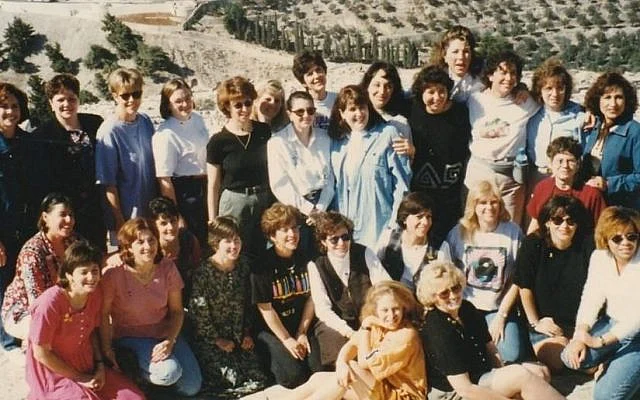
As Malka churned on my story, she remembered she had written the forward for the book on “The First Bridge” in the 2015. She had interviewed all the girls of Operation Babylift except one. I had already written to a few of the students of Operation Babylift Israel and one in Canada with no response. We both concluded that the one girl she did not interview must be the one!! She probably avoided any interview due to her Mossad status. I reviewed each school picture and I was sure it was her. The curly hair, slim figure, and the slim mouthe that almost smiled. Although, In Gondar I did not see her smile once.
Tirtza Taki Edgar!!My hero, my savior, and a savior to at least 500 Ethiopian Jews on that first march. The march of Operation Tirtza, 11 months before Operation Moses became official and open in the public. It’s been 40 years! Malka told me we would convene in her home in Modiin. One of Tzirtza’s daughters lived in Tel Aviv and another, Tahlia lived close to Tirtza on a kibbutz. Tge kibbutz had many Ethiopians and is not far from the Gaza border.
Malka hesitated, and said she’s a bit older now and her memory isn’t perfect. Her daughter was surprised she had never heard this story. I should not be disappointed if she just had a faint memory and she might not recognize me. I felt that couldn’t be. Those days and nights were so traumatic for me. Perhaps
because once I was in that airplane hangar- I felt the full weight of the obstacles they will incur to get to Israel in one piece, those moments must have had an impact on her!
I couldn’t wait to meet Tirtza and Malka was going to make it happen.
I felt like a kindergartner awaiting her 1st day of school!I arrived first to Malka’s. We chatted and I enjoyed all her crafts and treasures from various tribes from around the world. Tirtza walked in the door. Her Eyes sparkled, instant recognition , she came over and gave me a big hug! We laughed, we hugged- it was glorious! Then we sat down with delicious lemonade and sat back to reflect. yes, she remembere TV d me, the American redhead…. I was the last tourist and one of the few to ever visit the Ethiopian Jews of Wolleka and Ambobar.
If I had only had known that before my eyes these villages and villagers would dissolve and only have remnants left in Ethiopia… I would have been much more diligent in my questions and taken many more photographs. I wish I could have been assigned like S.Anskey and Roman Vishniac. Those men took photos around the pale of Poland and Russia.They are the only eyes we have to understand Jewish everyday life in The Shtetl. The Shtetls were dissolving slowly as those yearned to go to Israel and assimilate to the bigger villages and cities.
S.Ansky and Roman Vishniac had time to get individual portraits and nuances of their world. Their photos are remarkable studies of a bygone era of lost communities. Their photos nor stories from Shalom Alechem’s “Tevye” had the same impact or depth of understanding shtetl life as “Fiddler On Roof”, the broadway musical.
Maybe, what is needed to secure the memory of the life of The Jews in Ethiopia and how they lived for many centuries, is a bittersweet musical.
Tirtza assured me that time was not in my favor. Nor any actions that would avert attention. I was there for one reason only, to keep the children calm.. to pretend it was a normal school day and that I represented hope and peace from a distant land. The parents knew they were leaving that night. The children, the guide, and the armed guard did not know. I was their cover.
Tirtza only spoke Hebrew now, her daughter,Tahlia and Malka translated. She laughed as she thought of the word “cover.”
She then explained that the front desk clerk was part of the operation, and was the bartender and the lousy chef. He probably was Mossad also!
She said that he followed my every move at the hotel so Tirtza could be as far away as possible. The hotel was supposed to be used as the operational center but due to my presence they kept all on the low. I asked, “why I was kept in the dark?”
She said that everyone else in Gondar believed she was a female Ethiopian Soldier. Her Ahmaric was perfect. And here I was stirring the pot believing she was Mossad, up to something, and could speak Hebrew!!! She was very thankful that I was adept at reading her hand signal that night at dinner at Hotel Ghoa. I followed her command and visited the villages and acted as normal as possible even if the air was charged with fear and uncertainty. She explained that her brother led the group thru The Sudan and she stayed on to coordinate another group for departure. She said only one was taken by a thief and that her brother spent a year searching for her til he found her and got her to Israel.
I thanked her repeatedly, for watching over me, understanding that my best use was what I did at the villages. She was able to secure me passage via helicopter to Addis Ababa and onto Kenya. I reached Kenya and kissed the Tarmac, knowing how close my future could have been directed north to The Sudan. That same relief hit those Ethiopian Jews the minute they hit home on the tarmac in Israel. They kissed the tarmac. It is awe inspiring, in reflection, the power of Israel, The Mossad, The Organizations worldwide that raised funds to bring these Ethiopian Jews to their homeland and to prosper. Operation Tirtza and Operation Moses forever changed me. It created hope for a community when its resources were non-existent.
Tudor Parfitt organized an incredible exhibit at The South Florida Jewish Museum. The museum was originally Congregation Beth Jacob and had a regal air with historic value.This was “Operation Moses-40 Years Later”.My photos were on display. My story as an activist was enlarged wall size. My black ceramic figures from Ambobar and Wolleka were in cases, as were the books pertaining to the exhibit.
My pyramidal goat skinned satchel was in a glass case. My children were amazed that our craft collection is museum worthy. Tudor’s story was told with his photos and enlarged newspaper articles. There were recent National Geographic style photos taken by Peter Decherny . He showed life of the remaining B’nai Israel in Ethiopia. We had a panel of speakers, with Tudor as the moderator.
Peter Dechernay was on the panel, along with Sigal Kanatopsky, U.S. Northeast Regional director of The Jewish Agency for Israel, she was one of the children of Operation Moses who made it to Israel and then to the U.S. . Ophira Nuril came dressed in a traditional Ethiopian gauze outfit used for special occasions. Her Ethiopian dad was selected to help in The Sudan during Operation Moses. The event had around 200 attendees. The president of FIU was present. Afterwards, we all sampled wine and Ingera bread.
This was my mission, to help Jews worldwide share their bond. This voyage showed me that any assistance in any fashion can help change the course of history. During Operation Moses and Operation Solomon, I urged my community, my friends, my Temple, and many Jewish Organizations to donate. My lectures and photographs helped funds flow in. Operation Tirtza was the forerunner of Operation Moses. Today there are more than 177 thousand Ethiopian Jews. 94 thousand were born in Ethiopia. 84 thousand Ethiopian descendents were born in Israel.
Subscribe to the JFN Website and to the JFN WhatsApp Channel