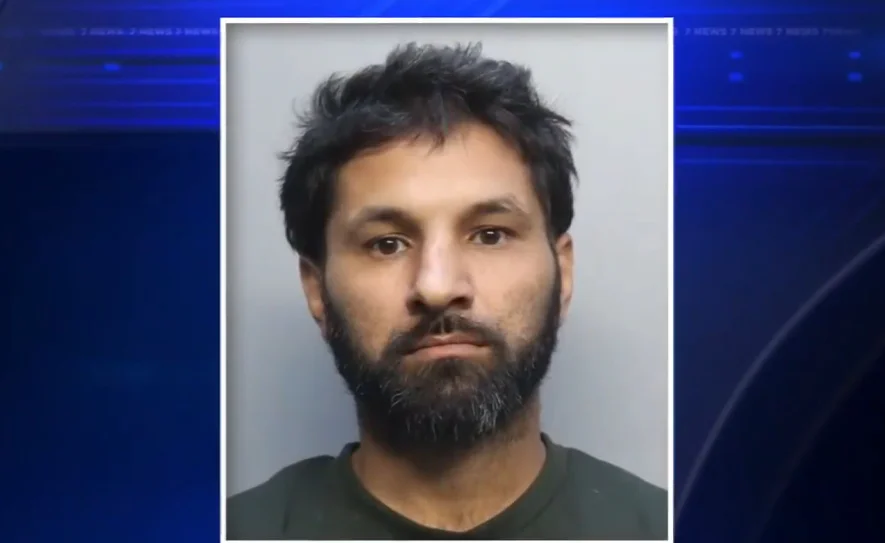
A Florida businessman has been indicted on federal charges accusing him of sending more than $46,000 through a fundraising network that prosecutors allege ultimately provided financial support to Hamas. The case also includes allegations that he made violent statements targeting Jews.
Raed Yousef, 56, of Lutz, Florida, faces 19 federal felony counts, including conspiracy to provide material support to a foreign terrorist organization, money laundering and passport-related offenses. He pleaded not guilty and remains in federal custody while the case proceeds.
According to federal prosecutors, Yousef became involved in a fundraising network that developed following Hamas’ Oct. 7, 2023, attack on Israel. Investigators allege the network included an organization based in France, a Hamas member in Gaza and another participant in Louisiana.
Prosecutors contend that the French organization presented itself publicly as a humanitarian group assisting people in Africa and the Middle East but allegedly transferred more than $330,000 to cryptocurrency accounts linked to Hamas. Authorities allege that Yousef personally sent more than $46,000 through the network.
Court filings allege that participants used WhatsApp, Telegram, Instagram, Snapchat and other communication platforms and sometimes used code words when discussing Hamas. Investigators also allege that members discussed deleting messages and removing communication applications in connection with travel.
In one conversation cited by prosecutors, Yousef allegedly advised an associate to tell potential donors that their contributions were intended for “needy people in Gaza.” Prosecutors argue that other communications indicated he understood that some of the money was allegedly intended for Hamas members rather than civilians.
The indictment also cites messages in which Yousef allegedly expressed violent views toward Jews. Prosecutors allege that in 2024 he called for Jews to be slaughtered and beheaded, including statements about displaying severed heads to frighten Israelis into leaving.
Yousef’s defense attorneys dispute the government’s interpretation of his statements and financial activity. His lawyers have argued that he believed his donations were being used for humanitarian assistance to Arabs in Gaza and that prosecutors are improperly using inflammatory political speech as evidence of criminal intent.
Yousef was born in Kuwait and spent part of his childhood in Jordan before moving to the United States as a teenager. He became a naturalized U.S. citizen in 1991 and owns six beauty supply stores in central Florida, according to his attorneys.
Federal prosecutors have also raised concerns involving his international travel and identity documents. Court filings allege that he possessed a Jordanian passport under a different name and made false statements in connection with a U.S. passport application.
Authorities further allege that a search of his residence uncovered approximately $75,000 in cash, six firearms and hundreds of rounds of ammunition. Investigators also reported finding material connected to the Holy Land Foundation for Relief and Development, a Texas-based organization whose leaders were convicted in a major federal terrorism-financing case involving Hamas.
During a detention hearing on Sept. 23, U.S. Magistrate Judge Natalie Hirt Adams ordered Yousef to remain in custody while the case continues, citing concerns about flight risk and potential danger to the community. He was arrested the previous week and pleaded not guilty at his Sept. 18 arraignment in Tampa.
The case comes as federal authorities continue investigating alleged Hamas financing networks involving purported humanitarian organizations, crowdfunding operations and cryptocurrency. Prosecutors have increasingly focused on whether organizations presenting themselves as humanitarian groups have been used to transfer money to Hamas or other terrorist organizations.
If convicted of the most serious charges, Yousef could face a sentence of up to life in prison. The allegations remain subject to the federal judicial process, and the government must prove the charges beyond a reasonable doubt.
Credit: The Jewish Voice
Subscribe to the JFN Website and to the JFN WhatsApp Channel